
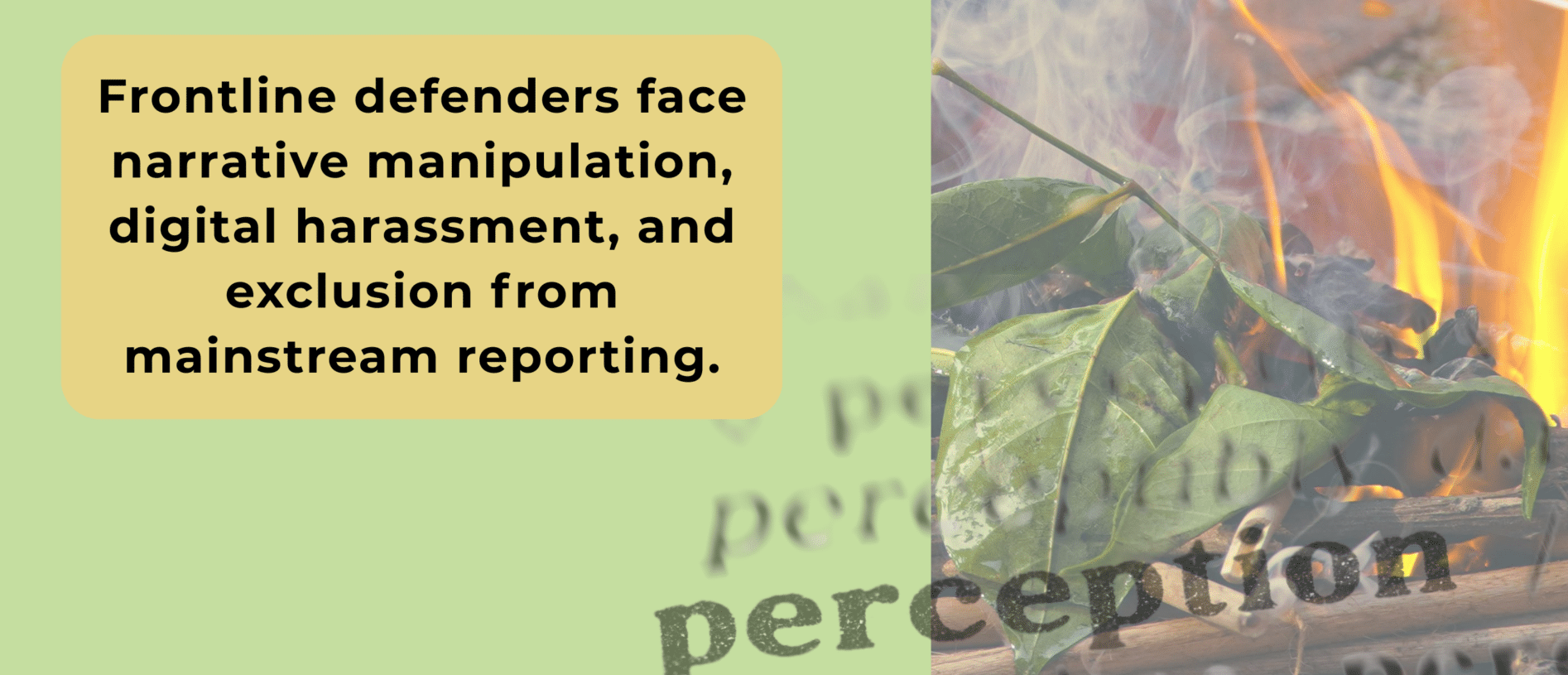
Who gets to tell the story of climate change—and whose voices are left out? As climate disinformation spreads across Asia, Indigenous communities are not only disproportionately affected, but also frequently misrepresented in media narratives. On 13 March 2026, a regional dialogue brought together journalists, Indigenous leaders, and researchers to confront these challenges and explore how climate stories can be told more responsibly. Below, we share the key insights and messages from each session.

Climate Disinformation and Indigenous Voices: Media Challenges, Indigenous Rights, and Regional Partnerships
13 March 2026 | 9:00 – 12:00 (GMT+7)
A total of 37 participants (out of 70 registered) joined the online dialogue, which commenced with opening remarks and set the stage for a timely discussion on climate disinformation and Indigenous voices.
9:00 – 9:10 Opening & Setting the Context
Opening remarks by Vanessa Chong, Programme Manager – Asia Initiative at International Media Support (IMS), highlighted the growing intersection between the climate crisis and the global information challenge. She noted that misleading narratives, manipulated data, and coordinated disinformation campaigns increasingly shape how the public understands climate change and can slow urgent climate action.

Vanessa emphasized that Indigenous Peoples are among those most affected by environmental change, yet their knowledge, voices, and stewardship practices are often overlooked or misrepresented in public discourse. Climate disinformation can undermine Indigenous knowledge systems, weaken community efforts to protect ecosystems, and justify development projects that threaten Indigenous lands and livelihoods.
She stressed the importance of strengthening responsible journalism, amplifying Indigenous storytelling, and building partnerships between media, Indigenous communities, and civil society to counter harmful narratives. The dialogue was organized in collaboration with Knowledge for Development Foundation and Indigenous Media Network Thailand, with support from the Digital Democracy Initiative led by Denmark, Norway, and the European Union.
9:10 – 9:25 Climate Disinformation Trends in Asia 🔗Presentation file
Research presented by Ekmongkhon (David) Puridej from Asia Centre highlighted emerging regional patterns of climate disinformation affecting Indigenous Peoples across Asia. Drawing from six country studies and one regional report, the presentation examined how misleading narratives shape public understanding of climate change and environmental governance.
David explained the evolving information landscape, distinguishing between misinformation, disinformation, and malinformation. Climate-related narratives in the region often take the form of climate delayism—which downplays the urgency of climate action—and climate denialism, which denies the causes, impacts, or necessary responses to climate change. These narratives frequently rely on partial truths or selective information to distort public perception.
Across multiple countries, climate disinformation is often linked to political and economic interests, particularly those related to land control and resource extraction. Indigenous communities are frequently targeted through narratives that blame them for environmental degradation or undermine their identities and rights.
The research identified several regional patterns:
- Strategic and coordinated narratives often linked to political or economic interests.
- Increasing use of malinformation, where partial truths are used to subtly shift blame toward Indigenous communities.
- Disinformation reinforcing existing forms of violence or repression, such as using anti-terrorism narratives against Indigenous environmental defenders.
- Use of climate narratives to justify land control and resource extraction.
The presentation also highlighted differences in political contexts. In India, Indigenous Peoples are formally recognized, but narratives are sometimes used to undermine their land and governance rights. In Thailand, Indigenous identity itself is often contested, with official discourse historically framing Indigenous communities as “hill tribes” rather than recognizing them as Indigenous Peoples.
Common forms of climate disinformation include:
- One-sided media coverage that excludes Indigenous perspectives
- Greenwashing narratives by corporations or institutions
- False climate solutions, such as carbon projects implemented without Free, Prior and Informed Consent (FPIC)
- Denial of accountability by powerful actors responsible for environmental damage
These narratives can have serious impacts on Indigenous communities, including exclusion from decision-making, displacement from traditional lands, criminalization of customary practices, and intimidation or violence against Indigenous environmental defenders.
Participants were encouraged to explore the full research findings from six country studies and one regional report: https://asiacentre.org/climate-disinformation-in-asia-trends-and-challenges/
9:25 – 9:50 Climate Disinformation & Indigenous Realities
Phnom Thano from the Indigenous Media Network (IMN), Thailand, highlighted how climate disinformation affecting Indigenous communities in Thailand is deeply connected to historical and structural factors, including long-standing assimilation policies and centralized governance systems. These policies have promoted a narrow definition of national identity, limiting recognition of Indigenous identities and marginalizing Indigenous knowledge and stewardship practices in environmental governance.

He highlighted that structural gaps in the media landscape contribute to the persistence of misleading narratives. News coverage often relies on non-Indigenous sources, with Indigenous voices rarely represented. According to observations shared during the session, only a small proportion of media sources discussing Indigenous issues come directly from Indigenous communities. At the same time, the rapid spread of information through social media has accelerated the circulation of unverified or oversimplified narratives.
A common example highlighted was the claim that Indigenous shifting cultivation practices drive deforestation. Phnom noted that available environmental data shows that many degraded forest areas are located outside Indigenous territories, yet such narratives continue to circulate widely without proper verification.
The impacts of climate disinformation occur at multiple levels. At the local level, Indigenous communities may face scapegoating, criminalization of traditional land practices, and violence. At the national level, misleading narratives can justify inappropriate environmental policies, false climate solutions, and identity denial. At the global level, the displacement of Indigenous communities from their lands threatens long-term biodiversity conservation and ecosystem stewardship.
To address these challenges, Phnom emphasized the importance of Indigenous-led media and storytelling. Strengthening networks of Indigenous content creators, expanding Indigenous media platforms, and promoting more contextual and field-based reporting can help counter misleading narratives. He also stressed the need for a holistic approach to journalism, integrating historical context, community knowledge, and environmental evidence in reporting on climate and Indigenous issues.
9:50 – 11:00 Media Integrity in Practice: Fact-Checking Meets the Newsroom
Panelists discussed the practical challenges journalists face when addressing climate disinformation and reporting on Indigenous issues in real newsroom settings. The discussion highlighted how misleading narratives about Indigenous Peoples and environmental practices often spread quickly through social media and are frequently embedded within partially accurate information, making verification complex and time-consuming.
Thitipan Pattanamongkol from Sarakadee Magazine shared examples of climate misinformation surrounding shifting cultivation, noting that Indigenous rotational farming systems are often misrepresented in media narratives despite long-standing ecological knowledge supporting their sustainability. He emphasized the importance of field reporting and building trust with communities to ensure more balanced and accurate storytelling.
Gwendolyn Gay L. Gaongen of Radyo Sagada, Philippines, highlighted the role of community-based media in verifying information through direct engagement with Indigenous communities. She stressed that Indigenous knowledge—built through generations of observation and lived experience—provides critical insights into climate and environmental changes. She also noted the need for stronger support systems for journalists, particularly small community newsrooms, including training on climate science, access to expert networks, and funding opportunities.
Eliana a/p Tan Beng Hui from Apa Kata Wanita Orang Asli, Malaysia, emphasized that effective verification should integrate scientific evidence with Indigenous knowledge systems, which are rooted in long-term ecological observation and community experience. She also highlighted the importance of community storytelling and collective initiatives involving women and youth to counter misinformation.
Nattakorn Ploddee of Agence France-Presse (AFP) Thailand explained that fact-checking climate claims is often challenging because misinformation frequently circulates alongside factual information. Verifying such claims requires significant time, resources, and editorial commitment, underscoring the need for newsroom cultures that prioritize verification and responsible reporting.
Nina Sangma from International Land Coalition highlighted how disinformation is often linked to broader political and economic interests, including extractive industries that benefit from weakening Indigenous land rights narratives. She emphasized that journalists should not only cover conflict or violence but also highlight Indigenous Peoples as frontline environmental stewards.

Across the discussion, panelists emphasized that responsible climate reporting goes beyond fact-checking to include fair representation, context, and long-term engagement with Indigenous communities.
A key challenge is the limited understanding of Indigenous Peoples (IPs) within many newsrooms, which often leads to incomplete or biased narratives. Participants stressed the importance of centering Indigenous voices, knowledge systems, and rights, rather than portraying communities only through conflict or crisis.
Responsible journalism should balance perspectives while clearly identifying underlying interests and power dynamics, particularly in relation to resource control and environmental governance. Reporting must be fact-based, accessible, and free of jargon, while also connecting local realities to broader structural and policy contexts.
Panelists also highlighted the need to challenge dominant media biases that overlook Indigenous stewardship and instead amplify negative or simplistic narratives. Ethical reporting should reflect that Indigenous livelihoods are often closely aligned with environmental conservation.
Finally, responsible coverage requires building sustained relationships with communities, not treating them merely as sources of information. This includes recognizing Indigenous Peoples as frontline actors in climate action, ensuring fair representation, and exploring structural changes within media institutions—such as dedicated Indigenous affairs reporting—to address deeper, systemic inequalities in storytelling.
11:00 – 12:00 BREAKOUT DISCUSSIONS: Responding to Disinformation: Skills, Tools, and Alliances
The breakout discussions demonstrated both convergence and divergence in how participants understand and respond to climate disinformation. Across both Room 1 and Room 2, there was clear consensus that the marginalization of Indigenous knowledge, combined with attention-driven media systems, creates structural vulnerabilities that enable misinformation and disinformation to proliferate. Participants in both groups emphasized the need for more ethical, inclusive journalism, strengthened collaboration across sectors, and enhanced media literacy and capacity.
However, Room 1 adopted a more systemic lens, focusing on governance gaps, the need for stronger policy and legal protections for Indigenous Peoples, and the strategic shift from reactive fact-checking toward proactive “prebunking” approaches.
In contrast, Room 2 foregrounded operational realities within the Thai media landscape, highlighting how financial constraints, donor priorities, and engagement metrics directly shape editorial decisions and narrative framing. This group placed greater emphasis on practical interventions, including human-centered storytelling, field-based reporting, and the use of innovative formats to increase audience engagement. It also underscored the critical role of intermediary actors—such as Indigenous media networks and support organizations—in providing resources, capacity building, and bridging collaboration with mainstream media.
These findings suggest that future interventions should adopt an integrated approach that combines policy advocacy, newsroom transformation, and sustained investment in Indigenous-led media. Without addressing both structural constraints and day-to-day media practices, efforts to counter climate disinformation risk remaining fragmented and limited in impact.
Dialogue Key Takeaways
Three core insights emerged from across all sessions:
1. Climate disinformation is a structural problem, not just an information one.
The dialogue reinforced that misleading climate narratives in Asia are shaped by deeper forces — media systems, power dynamics, and the long-standing marginalization of Indigenous voices. Indigenous knowledge and frontline experiences remain significantly underrepresented in mainstream coverage, leaving space for harmful portrayals to fill the gap. Media systems increasingly driven by engagement metrics — clicks, shares, viral headlines — can unintentionally amplify oversimplified or sensational narratives.
2. Responsible journalism must center Indigenous voices and lived realities.
Across sessions, participants emphasized the importance of field-based reporting, human storytelling, and sustained collaboration between Indigenous communicators, journalists, and researchers. Stronger capacity in science communication, data visualization, and fact-checking — approaches that are both rigorous and respectful of Indigenous knowledge systems — is essential to countering disinformation effectively.
3. Lasting change requires structural shifts across media, policy, and society.
Improved media literacy, stronger editorial standards, and enabling policy environments are all necessary to build a more accountable and inclusive media ecosystem. Without these changes, climate reporting will struggle to accurately reflect Indigenous perspectives — and the public understanding needed for equitable, effective environmental governance will remain out of reach.
####
The dialogue was organized in collaboration with Knowledge for Development Foundation, Indigenous Media Network (IMN) Thailand, and International Media Support (IMS), with support from the Digital Democracy Initiative led by Denmark, Norway, and the European Union.
Follow K4D on Facebook, Instagram and LinkedIn for more updates.